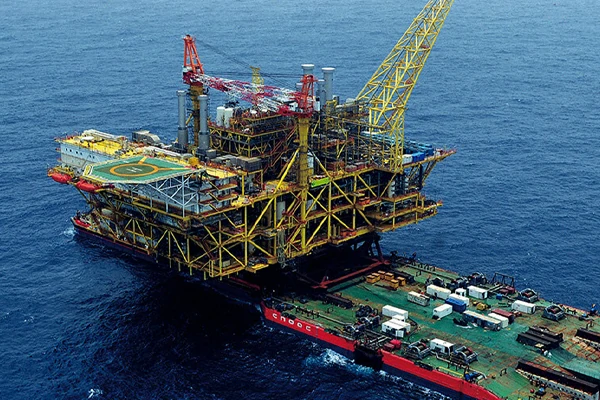
Self-floating Steel-clad Composite Bridge Anti-collision Facility

Safety,Stability and Economy are Our Core Product Power

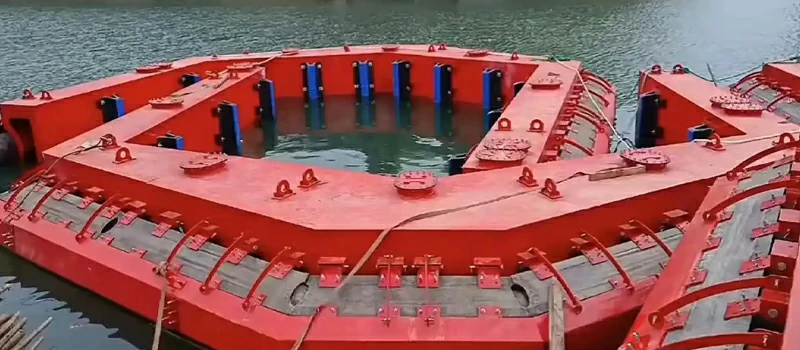
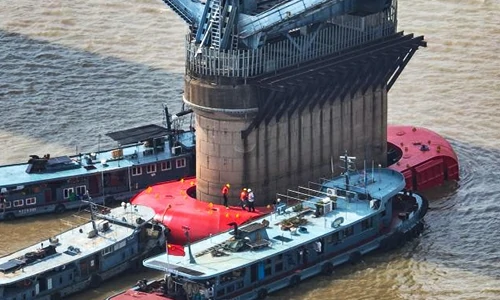
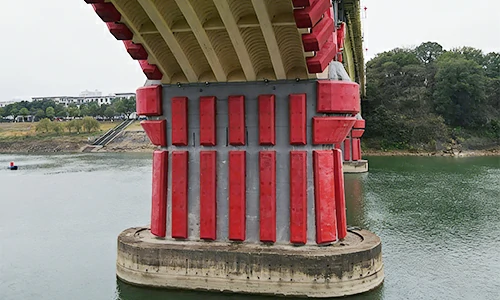
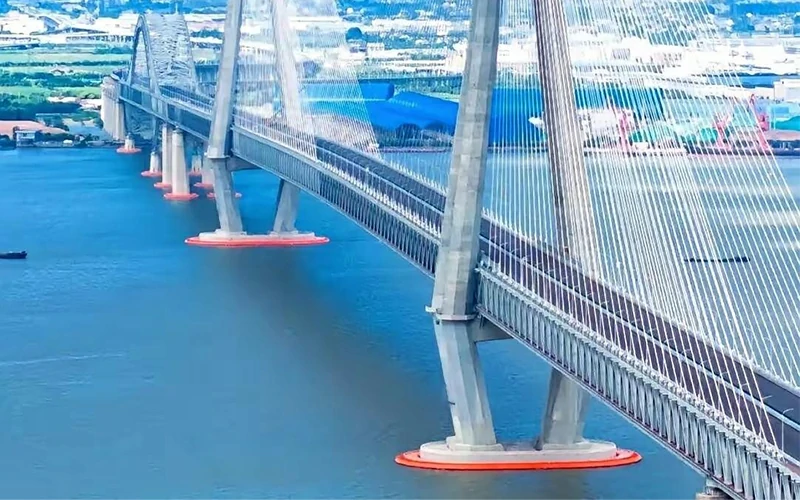
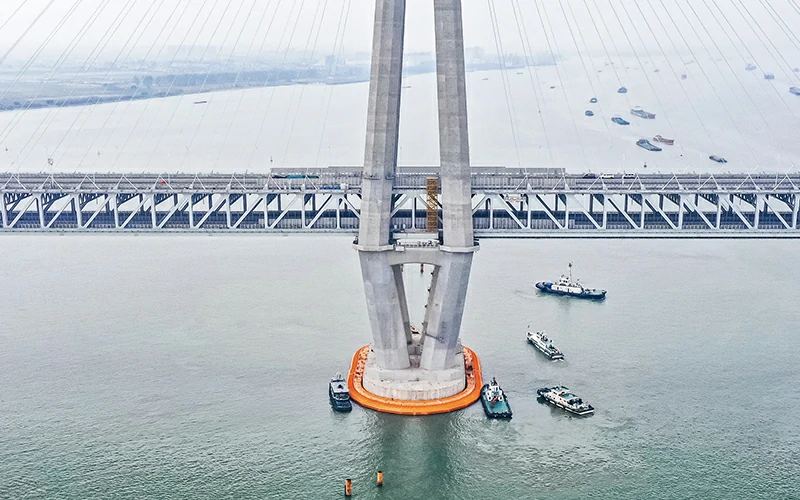
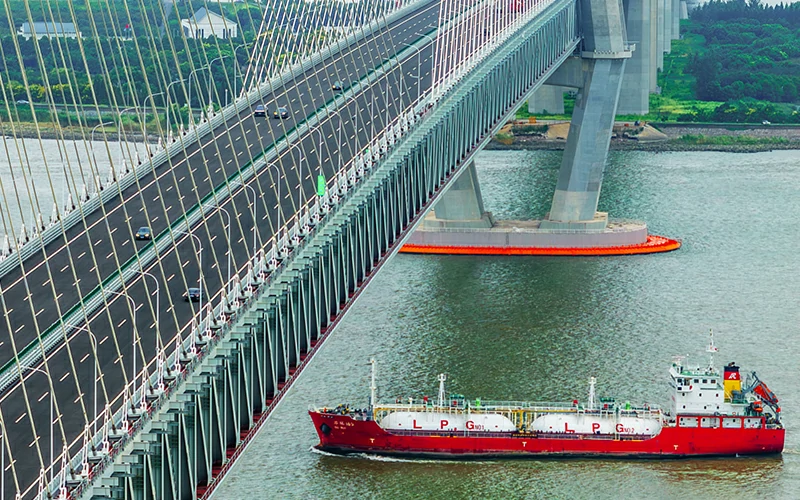
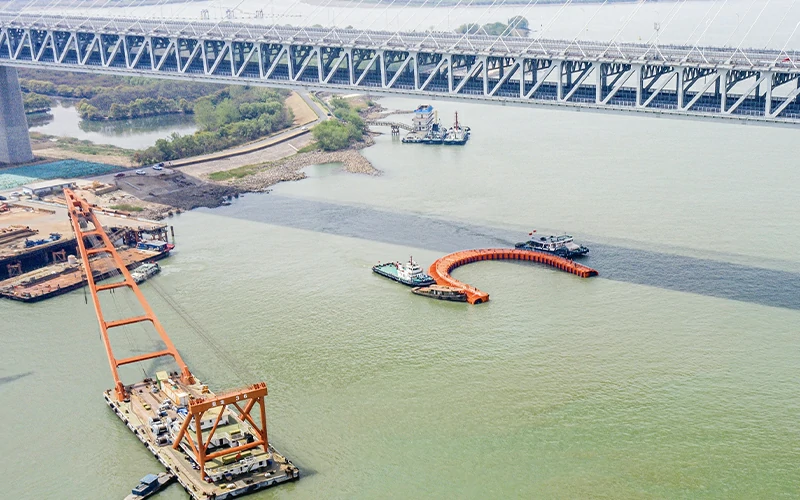
Self-floating steel-clad composite bridge collision protection facility is a new anti-collision system developed by NANHAI on the basis of traditional bridge collision protection equipment. Installed around bridge piers, it can float up and down along the pier axis by its own buoyancy according to changes in water level, always maintaining the optimal collision protection height.

NANHAI

New Bridge Protection for Complex Waterways
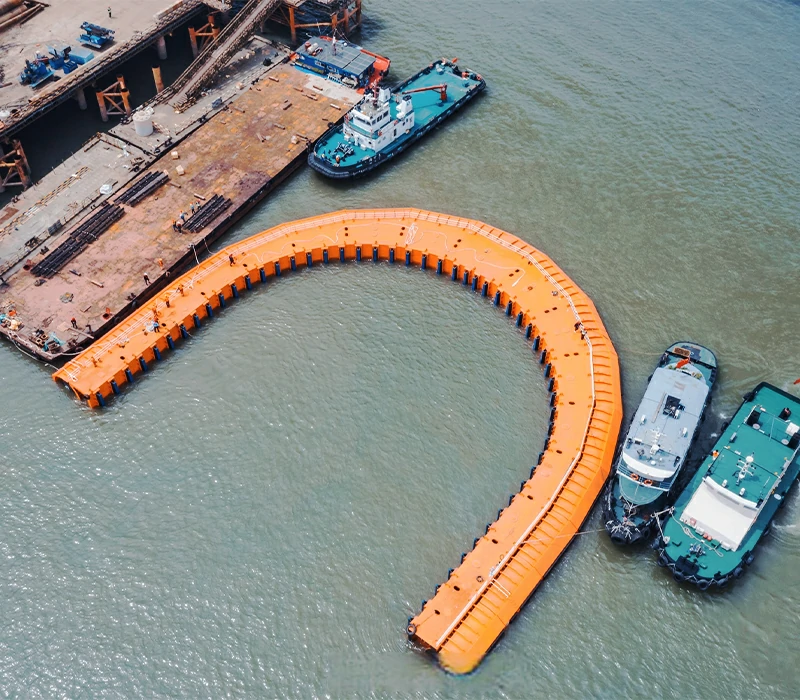
In navigation operations, operational errors, extreme weather and complex currents often cause ship collisions, threatening bridge and ship structures.
 
As cross-river and cross-sea projects expand, traditional anti-collision facilities show limitations due to heavy weight, easy corrosion and insufficient buffering.
 
The self-floating steel-clad composite bridge anti-collision facility is designed for complex hydrology and high-intensity navigation to reduce collision hazards to bridge structures.

Get a quote

New Bridge Protection for Complex Waterways
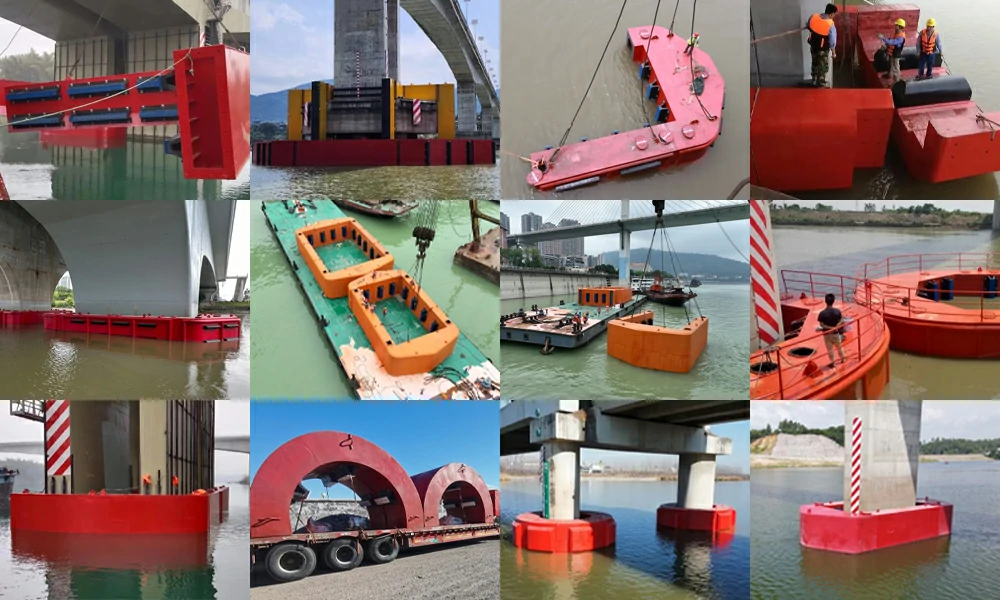
New Bridge Protection for Complex Waterways-2
Main configurations include: rectangular, semi‑circular, circular, profiled, polygonal, etc.

We also provide composite anti‑collision facilities with energy absorption ratings of 100t, 500t, 1000t and 3000t.

Available in a wide range of customizable colors.
NANHAI

Core Structure

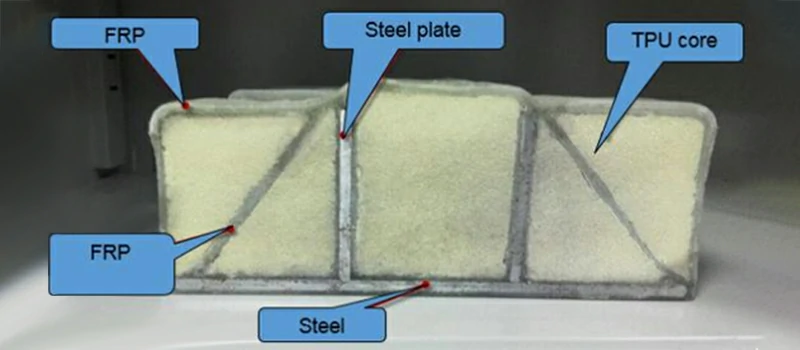
01 Steel-Clad Outer Shell

FRP composite shell with UV absorbers and anti-aging agents for long-term corrosion resistance and weatherability.
 

02 Energy Absorption Core

Filled with energy-dissipating lattice webs, steel plates, and closed-cell foam to absorb kinetic energy via friction and compression.
 

03 Damping System

Inner rubber damping elements and PE wear-resistant panels provide primary-level energy absorption to prevent daily fatigue impacts.
NANHAI

Core Advantages at a Glance

New Anti-Collision System vs. Traditional Solutions. See the core competitive advantages of the new anti-collision facility at a glance

New Anti-Collision System vs. Traditional Solutions

Comparison Item

Self-Floating Steel-Clad Composite Anti-Collision Facility

Self-Floating Steel-Clad Composite Anti-Collision Facility

Traditional Steel/Concrete Anti-Collision Facility

Traditional Steel/Concrete Anti-Collision Facility

Energy Absorption Flexible stepwise energy absorption Rigid force transfer
Lightweight 30%–50% weight reduction Heavy, load-increasing
Ease of Maintenance Modular, 15–20 years maintenance-free Heavy equipment-dependent, regular anti-corrosion
Environmental Adaptability Self-floating, adaptive to complex currents Fixed, displacement-prone
Protection Strategy Intact/repairable/quick-replaceable Permanent damage on severe impact

Five Core Product Advantages

Superior Energy Absorption (Bridge & Vessel Protection)
Flexible materials combined with internal fillers can reduce impact force by over 60%, minimizing vessel damage to the greatest extent.
Lightweight & Convenient
Independent units are lightweight, resulting in low transportation and hoisting costs, and effectively ensuring the safety of bridge structures.
Exceptional Weather Resistance
Resistant to acids, alkalis, and salt spray, maintaining stable performance under tidal changes and harsh hydrological environments.
Active Guidance
The rounded corner structure can deflect the bow, preventing the vessel from continuing to impact the pier and actively reducing collision energy.
Customizable Appearance
The exterior can be customized with eye-catching colors or reflective coatings, significantly improving visual safety for nighttime navigation.
NANHAI

Successful Cases

A collection of bridge anti-collision engineering practices, demonstrating the mature application and reliable performance of self-floating anti-collision facilities in various water areas and working conditions.
In 2025, an overseas company approached NANHAI for a bridge protection project.
 
The self-floating steel-clad composite bridge anti-collision facilities developed and manufactured by NANHAI stood out among many competitors for their outstanding safety, stability and high adaptability, and won the bid successfully.
 
Product Name: Self-Floating Steel-Clad Composite Bridge Anti-Collision Facility
Application: Bridge Protection

Frequently Asked Questions (FAQ)

1Is the product design compliant with current national standards?
Yes, fully compliant. Our product design and R&D strictly followJTG/T 3360-02-2020 Specifications for Collision Design of Highway Bridges.
2How does the facility avoid displacement in fast-flowing water?
It is equipped with a professional connection mechanism and an internal damping system.The streamlined bottom design effectively reduces water resistance, ensuring structural stability even in high-flow conditions.
3How does the product meet anti-collision requirements under large water level fluctuations, such as in reservoir areas or tidal zones?
Our product adopts a self-floating design. It features a streamlined floating body structure at the bottom, filled with high-density closed-cell foam, ensuring it floats up and down with the water level at all times.The protection zone always covers the water surface where ships are most likely to collide.
NANHAI

NANHAI Advantages

YOU GOT QUESTIONS, WE GET THE ANSWERS YOU NEED

We commitment that we will try our best to solve all the questions for our customer. We welcome and valued your advice to us. We are not only your supplier but also your key of success and your partner of business.

CONTACT

Feel free to contact us for more details

Feel free to contact us for more details

5608 Shuang shan st. Jinan city,Shandong province, CHINA

For better communication, please leave your contact number.

Do you have any question?


    Have Your Attention Please

    NANHAI Related Application Areas

    The development of NANHAI during the past 20 years has involved various maritime fields, providing global customers with overall solutions for Berthing, Mooring, Marine Floating Technology, Bridge Protection Engineering, Offshore Engineering, Shipyard Solutions etc.