


What Are the Shipping Routes Through the Arctic?
01/26/2026The 8 Different Types of Oil Rigs
01/29/2026Difference Between a Cone Fender and a Cell Fender?
Marine fender systems play an important role in port operations. They protect ships and quay structures during berthing and mooring. Among many types of rubber fenders, cone fenders and cell fenders are two of the most widely used. Although they serve the same basic purpose, their design, performance, and application are quite different.
This article explains the main differences between cone fenders and cell fenders in a clear and practical way.
Cone Fender
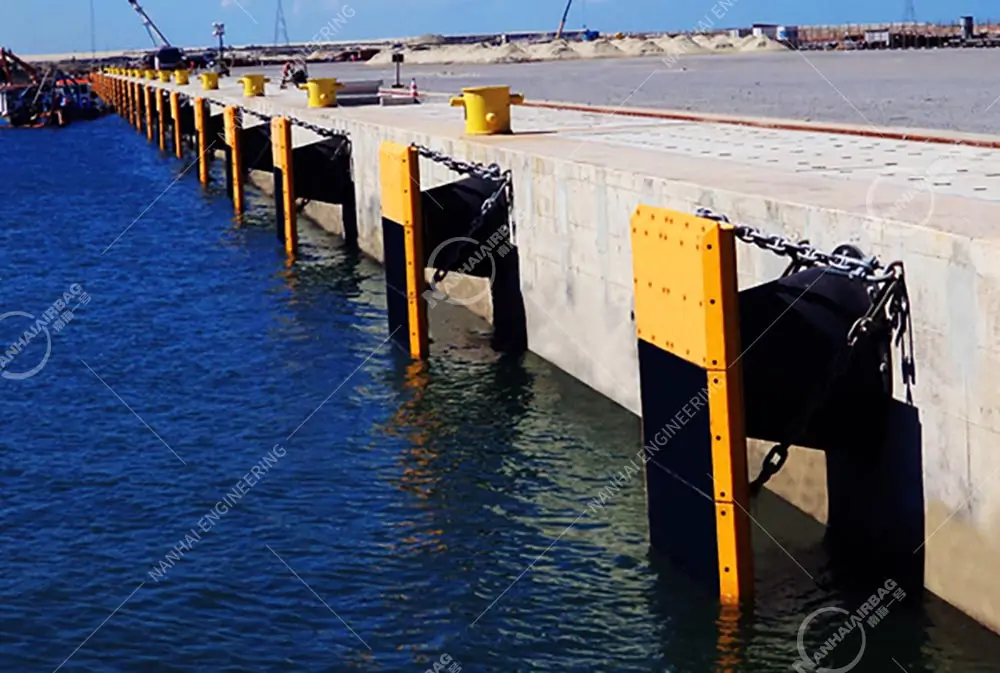
A cone fender has a cone-shaped rubber body. It is usually installed together with a frontal frame and a low-friction panel. The shape allows the rubber to deform evenly when a ship comes into contact with the berth.
One key feature of the cone fender is its high energy absorption. It can absorb large berthing energy while keeping the reaction force relatively low. This helps reduce stress on both the ship and the quay structure. Even when the ship approaches the berth at an angle, the cone fender remains stable and continues to work effectively.
Because of these features, cone fenders are often used in modern ports. They are common at container terminals, oil and gas jetties, and LNG terminals, where large vessels and high berthing energy are involved.
Cell Fender
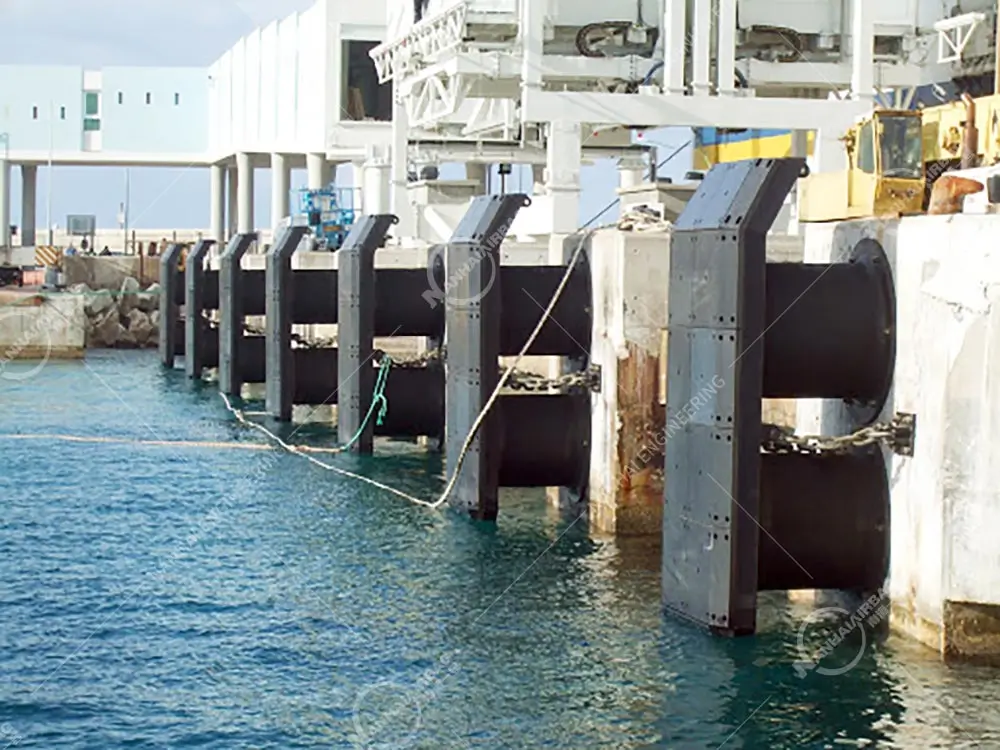
A cell fender has a cylindrical shape with a hollow center. It usually has flanges at the top and bottom for bolting to the quay wall. This type of fender absorbs energy mainly through vertical compression of the rubber body.
Cell fenders have a simple and robust design. They have been used in ports for many years and are well known for their reliability. Compared with cone fenders, their structure is easier to understand and manufacture.
Cell fenders are widely applied in general cargo ports, bulk terminals, and many conventional berths. They are suitable for medium to large ships and for projects where proven solutions are preferred.
Key Differences Between Cone Fender and Cell Fender
The most obvious difference between the two is their shape. The cone fender has a tapered design, while the cell fender is round and straight. This difference in shape leads to different performance behavior.
In terms of energy absorption, cone fenders usually perform better. For the same size, a cone fender can absorb more energy than a cell fender. At the same time, it generates lower reaction force. This makes cone fenders more suitable for large vessels and heavy-duty berths.
Stability is another important difference. Cone fenders perform well under angled berthing and uneven loads. Cell fenders are stable under normal conditions but may have limitations when dealing with large berthing angles.
The application range also differs. Cone fenders are often chosen for high-performance requirements and modern port designs. Cell fenders are still widely used in traditional ports and in projects where the operating conditions are less demanding.
Conclusion
Both cone fenders and cell fenders are effective marine fender systems. They are designed to protect ships and port structures, but they do so in different ways. Cone fenders focus on high performance and flexibility, while cell fenders offer a simple and proven solution.
Understanding these differences helps engineers, port operators, and project owners make better decisions when planning or upgrading marine facilities.
FAQ
1. What is the main purpose of a marine fender?
A marine fender is used to absorb the energy of a ship when it comes alongside a berth. It helps prevent damage to the ship and the quay wall during berthing.
2. Is a cone fender always better than a cell fender?
No. A cone fender is not always the better choice. It performs well under high loads and large ships, but a cell fender can be more suitable for normal berthing conditions and traditional ports.
3. Which fender type can absorb more energy?
In general, a cone fender can absorb more energy than a cell fender of similar size. It also produces lower reaction force under the same conditions.
4. Are cell fenders still widely used today?
Yes. Cell fenders are still widely used around the world. Their simple design and proven performance make them a common choice for many port projects.
5. Can both fenders be used with frontal frames?
Yes. Both cone fenders and cell fenders can be installed with frontal frames and low-friction panels, depending on project requirements.