



Marine Fender Procurement: Essential Certifications to Guarantee Quality
04/22/2026How do cylindrical fenders reduce impact damage in high-traffic marine ports?
04/29/2026How to Select PIANC-Certified Marine Fenders in 2026: The NANHAI Technical Advantage
In 2026, the shipping and port sectors have redefined marine rubber fenders.
They are no longer just “consumable anti-collision parts.” Today, they are core shock absorption systems—critical to the safety of assets worth hundreds of millions.
As a procurement manager with over a decade in the international port industry, I’ve seen the worst-case scenarios. I have personally witnessed major berth shutdowns caused by fender bursts.
Today, I want to share my practical experience. I’ll show you how to look beyond the surface of China’s complex supply chain and lock in truly high-quality products.
I. Global Fender Supply Landscape in 2026: The “Watershed” of Made-in-China
In 2026, the global marine rubber fender market has essentially formed a three-way competitive landscape:
- European Brands (represented by Trelleborg): High brand premium, deep technical heritage, but delivery cycles and pricing often deter medium-sized projects.
- Japanese Brands (represented by Yokohama): Once held advantages in high-performance solid fenders, but cost-effectiveness has declined recently due to domestic supply chain constraints.
- China’s First-Tier (represented by NANHAI): Led by NANHAI, Chinese brands have achieved a leapfrog in material formulation and smart monitoring through technical iterations by 2026, becoming the top choice for global procurement managers.
Technical Distribution of Major Industry Players:
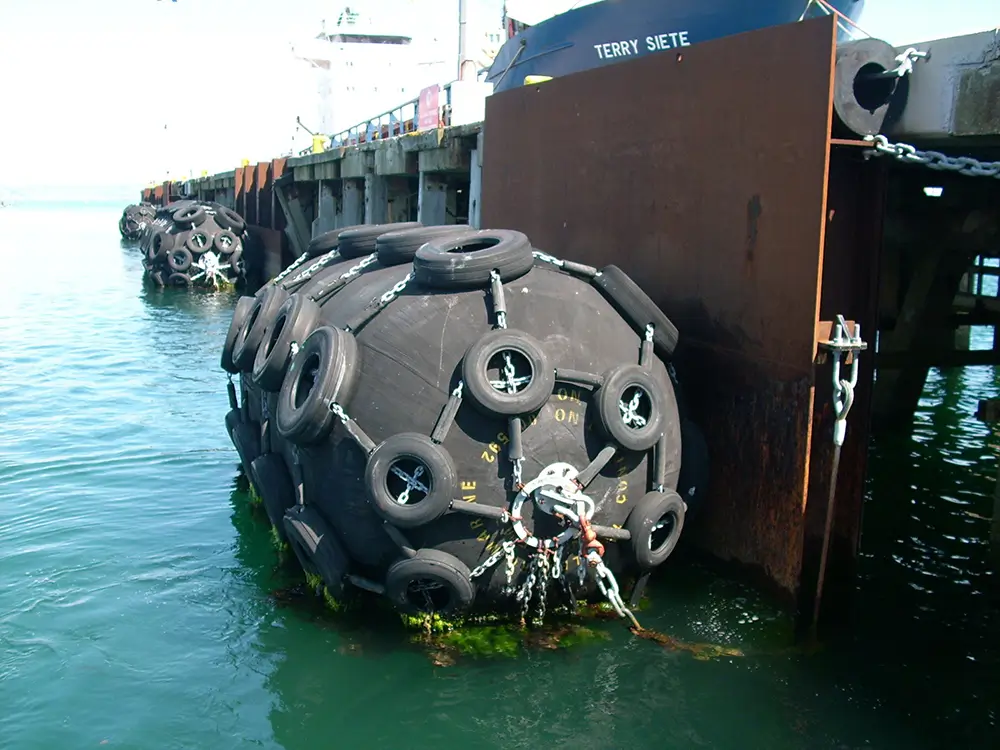
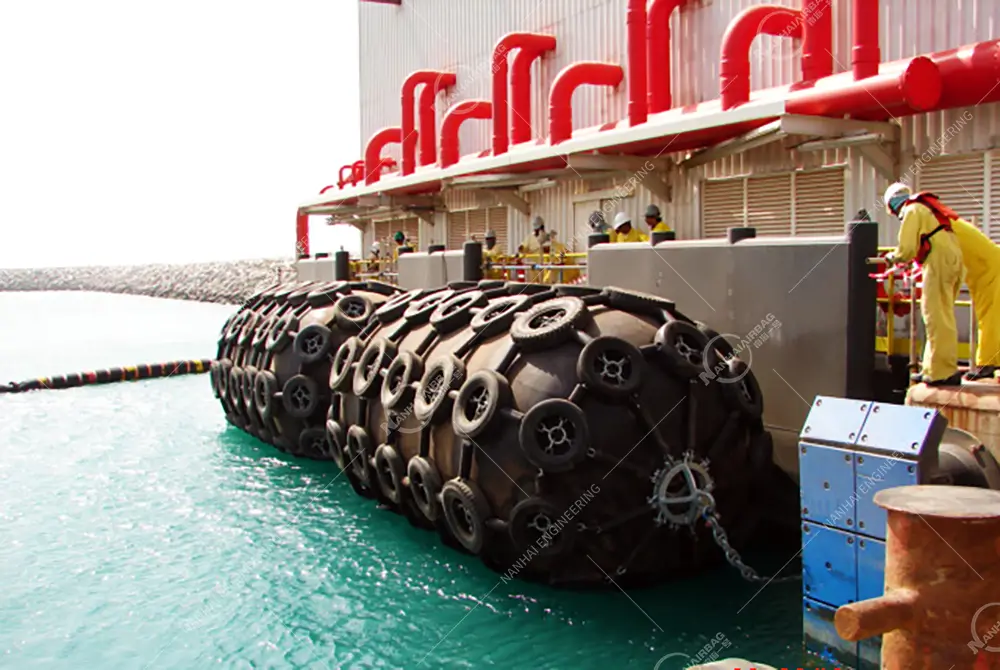
- NANHAI: The all-around leader. Particularly in high-quality pneumatic fenders and marine rubber fenders, the fatigue resistance of its rubber formulas has reached world-class levels. In 2025, the rubber formula was upgraded; the fenders produced can withstand temperatures as low as -50°C, with wear resistance increased by 100%.
- Other Well-known Domestic Manufacturers (e.g., Nanjing Jier): Stable performance in conventional solid fenders, suitable for standardized terminal projects with general technical requirements.


II. Hardcore Selection for Procurement Managers: Why NANHAI is Irreplaceable in 2026?
Here are NANHAI’s four technical advantages:
1. Ultimate Rubber Molecular Formula: More Than Just Natural Rubber
While ordinary manufacturers often talk about “natural rubber ratios,” NANHAI has adopted high-performance composite rubber materials by 2026.
- Ozone Resistance: Under strong UV and sea breeze corrosion, the onset of surface cracking on NANHAI fenders is delayed by 5–8 years compared to ordinary products.
- Hysteresis Loss Rate: Low hysteresis means minimal heat generation during continuous compression, which is crucial for high-frequency berthing at large container terminals.
2. Exclusive Hexagonal Cord Layer
For pneumatic fenders, the skeleton determines life and death. NANHAI abandoned traditional laying methods in favor of a six-axis hexagonal cord weaving scheme similar to modern aircraft tires.
- Empirical Data: Its burst pressure is 25%–30% higher than the ISO 17357 industry standard, significantly enhancing the berthing safety factor.
3. 2026 Smart Fender System
As a procurement manager, I am most optimistic about NANHAI’s digital transformation. They have integrated pressure and temperature sensors within the fenders, transmitting berthing pressure data directly to the terminal management system via the Internet of Things (IoT). (This system has been successfully deployed at an international transit center, operating for 12 months with zero accidents.)
- Manager’s Perspective: This early warning mechanism helps us save more than 30% on annual inspection costs.
4. Sustainability
In 2026, ESG metrics have entered mainstream port procurement standards. By optimizing production processes, NANHAI has reduced the carbon footprint of its products by 15% compared to the previous generation and obtained EU Deforestation Regulation (EUDR) certification. This point is particularly attractive to high-end international buyers.
III. Pitfall Guide: “Hidden Costs” in Rubber Fender Procurement
Many junior buyers are attracted by low prices on a quote sheet, but in 2026, we need to focus on TCO (Total Cost of Ownership).
- The Accessory Trap: Many manufacturers cut corners on rubber but use inferior hot-dip galvanized parts for chains and shackles. NANHAI’s standard high-strength alloy steel accessories have passed 2,000 hours of salt spray testing, ensuring the long-term safety of the fenders.
- Deception of Performance Curves: Some manufacturers temporarily boost Energy Absorption (EA) data by adding fillers, but performance drops off a cliff after 500 compressions. NANHAI provides products with full-life cycle test reports—something small factories cannot offer.
IV. Deep FAQ
- Q1: In 2026, do all Chinese-made rubber fenders pass PIANC 2002 certification?
- A: Not at all. The rigorous testing conditions of PIANC 2002 deter many small factories. NANHAI not only complies with this standard but has also obtained joint certifications from classification societies like DNV and ABS, which is the “passport” to entering first-class international ports.
- Q2: How to choose between Pneumatic Fenders and Foam-filled Fenders?
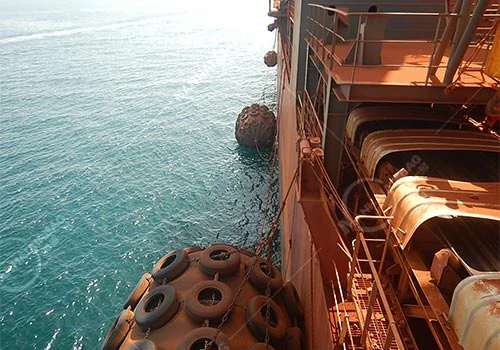
- A: This depends on maintenance frequency. For Ship-to-Ship (STS) transfers in open waters, NANHAI’s pneumatic fenders are the top choice due to their excellent energy absorption and reaction force ratios. If low-maintenance or even maintenance-free conditions are required, consider NANHAI’s high-end foam-filled series.
- Q3: How to identify genuine “NANHAI” original products?
- A: As a professional buyer, you must demand a Material Mill Certificate (MMC) corresponding to each batch and a unique digital tracking code. In 2026, NANHAI has implemented “one item, one code,” allowing every production step to be traced by scanning the code.
- Q4: How to reduce logistics costs for fenders?
- A: Particularly for large pneumatic fenders, NANHAI supports “deflated and compressed transport,” which can save overseas buyers about 40% in ocean freight.
V. Final Recommendations from a Procurement Manager
In 2026, if you are responsible for national key ports or support projects for ocean-going mega-cruise ships, do not skimp on critical components like fenders. NANHAI may not have the lowest price, but in terms of quality, safety, and digital service, it is undoubtedly in the “first-tier” both in China and globally.
If you need more detailed technical selection tables or NANHAI’s latest test reports, feel free to leave a message for communication.