



How to Check the Airtightness of a Pneumatic Fender?
12/17/2025What Is a Fender for a Boat, Ship, and Dock?
12/22/2025What Factors Affect the Price of Pneumatic Rubber Fenders?
In ship-to-ship operations and vessel berthing, pneumatic rubber fenders are critical protective equipment. However, many buyers notice that pneumatic fenders that look similar can vary greatly in price.
In fact, the price of a pneumatic rubber fender is not determined simply by its size. It is influenced by multiple technical, structural, and application-related factors. Understanding these factors helps buyers make more rational decisions between budget, performance, and safety.
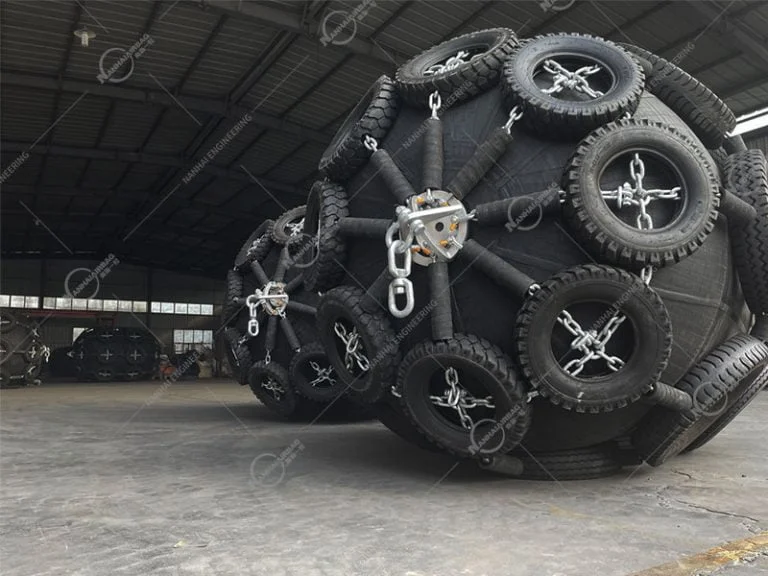
1. Basic Working Principle of Pneumatic Rubber Fenders
A pneumatic rubber fender is an air-filled rubber device designed to absorb berthing energy. During vessel berthing or ship-to-ship operations, the fender absorbs kinetic energy by compressing the air inside, protecting both the vessel hull and the berth structure.
Compared with solid rubber fenders, pneumatic fenders can absorb much higher energy while maintaining lower and more stable hull reaction force. This makes them especially suitable for large vessels, high berthing speeds, and high-energy applications.
Pneumatic fenders manufactured in accordance with ISO 17357-1 have clearly defined and comparable performance indicators, including energy absorption, reaction force, and deflection. These standardized parameters form an important basis for price differences.
2. Size and Energy Absorption Capacity
Size is one of the most direct factors affecting price.
- Larger diameters and lengths require more rubber, reinforcement materials, and longer manufacturing time, increasing production complexity
- Larger fenders are typically designed to absorb higher energy
- Transportation, lifting, and packaging costs increase significantly for large-size fenders
It is important to note that pneumatic fenders are not priced simply by size, but rather by their designed energy level and safety margin.
3. Material Quality and Internal Structural Design
Material and structure are among the most critical factors behind price differences.
High-quality pneumatic rubber fenders typically feature:
- High-performance rubber compounds with improved wear resistance, aging resistance, and UV resistance
Nanhai currently supplies environmentally compliant rubber meeting EUDR requirements, maintaining stable performance even in extreme environments down to –50°C - High-strength cord layers (such as polyester cords) that provide superior structural stability
- Multi-layer integrated construction that ensures consistent performance under repeated compression
Lower-priced products may compromise on rubber formulation or cord quality. While differences may not be obvious in the short term, they become significant in terms of service life and safety.
4. Internal Pressure Rating and Safety Configuration
Common working pressure ratings for pneumatic rubber fenders are 50 kPa and 80 kPa.
- Higher working pressure requires stronger structural design
- The fender must maintain stable reaction force and safety under higher pressure
- Large fenders with diameters above 2.5 meters usually require safety valves to prevent overpressure damage
These design and safety features increase manufacturing cost and are directly reflected in the final price.
5. Hull Reaction Force Control Capability
A key characteristic of high-quality pneumatic fenders is their ability to maintain stable hull reaction force under different sizes and compression conditions.
This capability cannot be achieved simply by increasing rubber thickness. It depends on precise structural design and proper material matching. Fenders with excellent reaction force control significantly reduce stress on both vessel hulls and berthing structures, which naturally results in higher pricing.
6. Price Differences Between Net -Type and Sling-Type Pneumatic Fenders
Different structural types of pneumatic fenders also result in price differences.
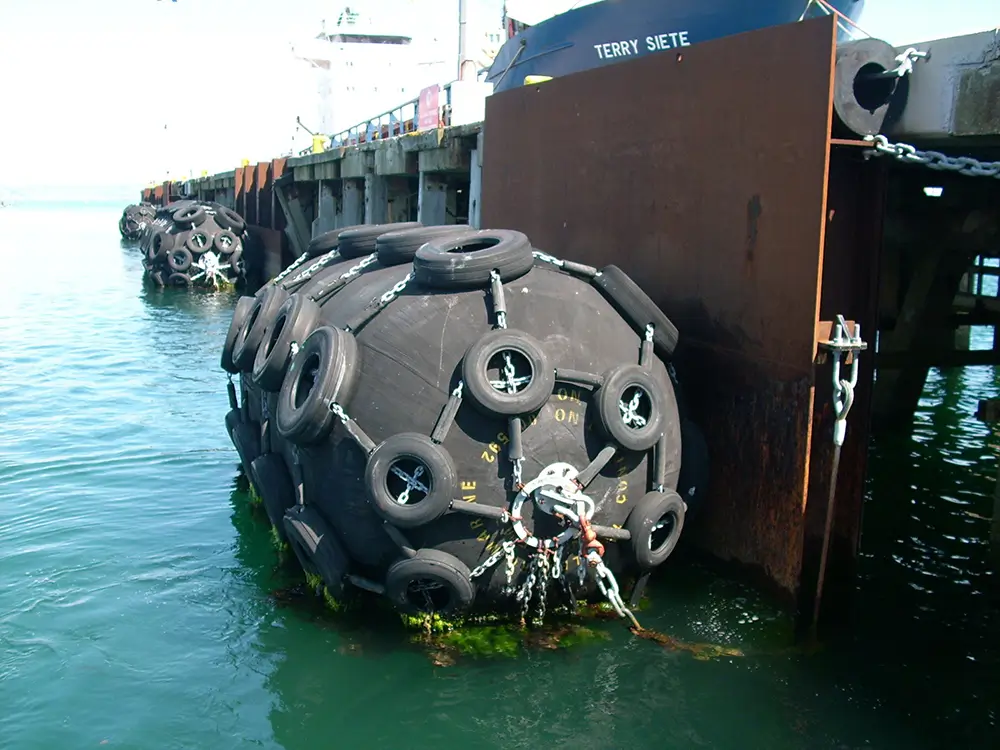
Net-Type Pneumatic Fenders
- Equipped with external chains, tires, or rubber sleeves
- Superior abrasion resistance, suitable for long-term and frequent use
- Longer service life with lower maintenance requirements
- Higher initial purchase cost
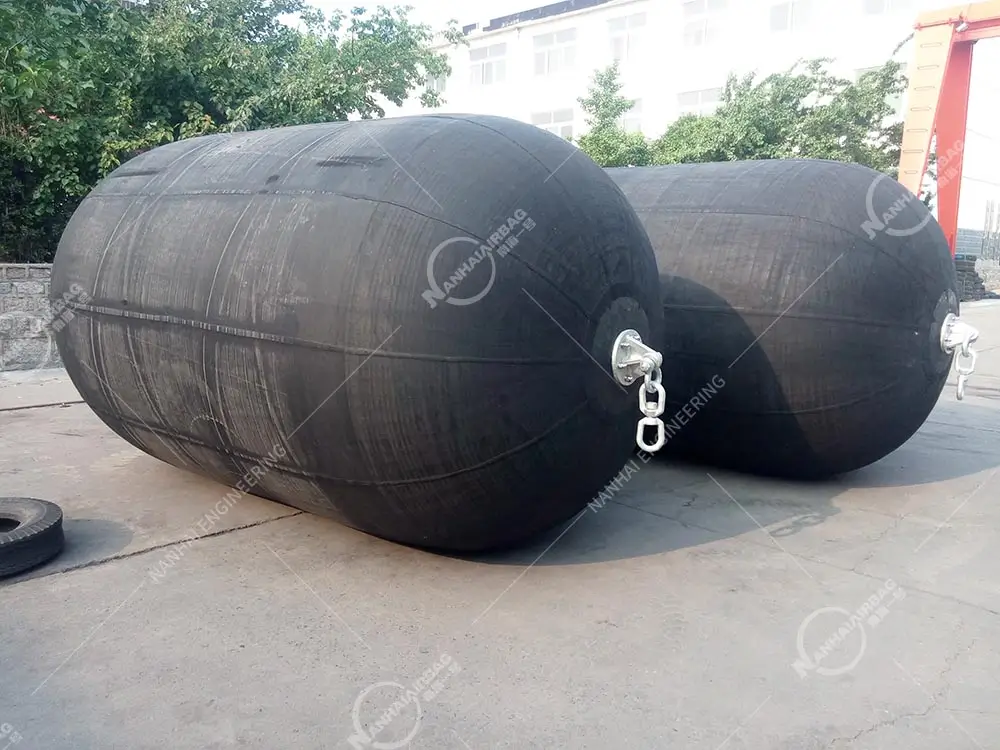
Sling-Type Pneumatic Fenders
- Simpler structure without a full external protective system
- Lighter weight, easier to handle and install
- More suitable for temporary or short-term operations
- Lower initial price
When comparing prices, it is more reasonable to evaluate total lifecycle cost rather than focusing only on initial purchase price.
7. Accessories and Installation Hardware
The performance of a pneumatic fender depends not only on the fender body but also on its accessories:
- Chains, shackles, and swivels are critical load-bearing components
- Marine-grade materials and corrosion protection increase cost
- Customized mounting points or reinforced structures also affect pricing
Although accessories may represent a smaller portion of the quotation, they are essential for safety and reliability.
8. Order Quantity and Procurement Method
Procurement strategy also influences unit price:
- Bulk purchases generally result in more competitive pricing
- Long-term supply agreements help reduce risks associated with raw material price fluctuations
- Small-batch or non-standard orders usually have higher unit costs
9. Impact of Customization on Price
The following customization requirements can affect pricing:
- Non-standard dimensions or special pressure ratings
- Custom colors and permanent branding
(Nanhai currently offers permanent markings that enhance both appearance and identification) - Reinforced designs for specific operating environments
Customization does not necessarily mean high cost, but early communication with the manufacturer is essential to achieve an optimal solution.
Conclusion: How to Evaluate Pneumatic Fender Pricing Rationally
The price of a pneumatic rubber fender is not an isolated number—it reflects a combination of performance, safety, and service life.
In critical operations, choosing a low-priced product often leads to higher maintenance costs, shorter lifespan, and increased safety risks. From a long-term perspective, investing in a well-designed and reliable pneumatic fender offers better overall value.
FAQ
1. Why do pneumatic rubber fenders with similar sizes have different prices?
Because price is influenced by material quality, internal structure, pressure rating, safety configuration, and performance design—not size alone.
2. Is a higher-pressure pneumatic fender always better?
Not necessarily. Higher pressure provides higher energy absorption but requires stronger structural design and proper safety configuration. The correct choice depends on the application.
3. How long is the service life of a pneumatic rubber fender?
With proper materials and maintenance, high-quality pneumatic fenders typically last 8–12 years.
4. Are sleeve-type pneumatic fenders more cost-effective?
For long-term and frequent use, sleeve-type fenders usually offer lower lifecycle cost despite higher initial price.
5. Does customization significantly increase the price?
Customization may increase cost, but early planning and clear technical requirements help control overall expenses.