



Green Ports: Recyclable Pneumatic Rubber Fenders in Practice
10/16/2025Heat Sealing Technology of Foam Fenders
10/20/2025What is the history of Yokohama fenders?
The Fender That Changed Modern Port Safety
In the world of modern port operations, Yokohama fenders stand as one of the most trusted names in marine protection. These black, air-filled cylinders are seen everywhere — between tankers and terminals, offshore platforms, and ship-to-ship (STS) operations.
But have you ever wondered where these fenders came from? Or why people still call them “Yokohama fenders,” even when many brands now make similar products?
This guide will walk you through the fascinating history of Yokohama fenders — how they were invented, how they evolved, and how they became the foundation of today’s pneumatic rubber fender industry.
At NANHAI, we honor that history while bringing innovation and reliability to every pneumatic fender we produce.
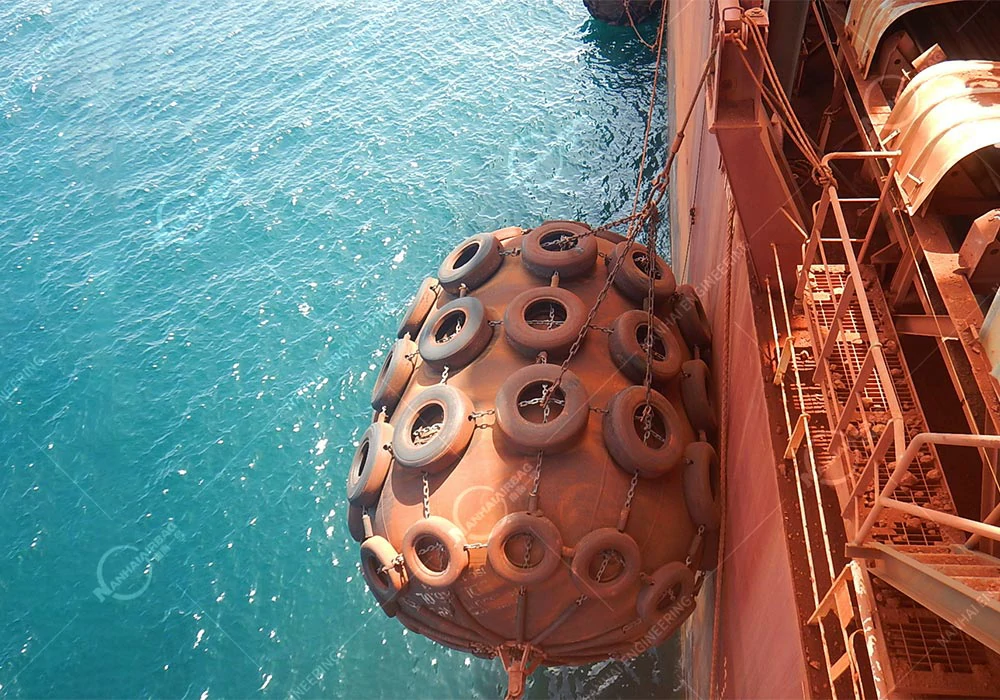
1. The Beginning: A Japanese Innovation That Changed the Industry
The story of Yokohama fenders begins in 1958. The Yokohama Rubber Company, already famous for its tires, applied its rubber and air technology to the marine world. Their goal was simple yet ambitious: create a floating fender that could absorb energy better than any solid rubber or foam fender at the time.
Traditional fenders were made of solid rubber or timber and couldn’t adjust to large ship movements or heavy impacts. The new pneumatic design, filled with compressed air, could deform under pressure and bounce back smoothly — reducing damage to both ships and structures.
This breakthrough led to the birth of the Yokohama Pneumatic Rubber Fender, the world’s first of its kind. Soon, ports and shipowners worldwide began using it for oil tankers, cargo ships, and even military vessels.
2. The Relationship Between Yokohama Fenders and Pneumatic Rubber Fenders
Over time, the name “Yokohama fenders” became almost a generic term for pneumatic rubber fenders — much like how people say “Kleenex” for tissues or “Velcro” for hook-and-loop fasteners.
So, what’s the real relationship?
- “Yokohama fenders” originally referred to the brand made by the Yokohama Rubber Company.
- “Pneumatic rubber fenders” is the general category of fenders that use air pressure to absorb impact.
In short, all Yokohama fenders are pneumatic rubber fenders — but not all pneumatic rubber fenders are Yokohama brand.
Today, several manufacturers (including NANHAI) produce high-quality Yokohama-type fenders that meet or exceed international standards, providing the same trusted performance and durability.
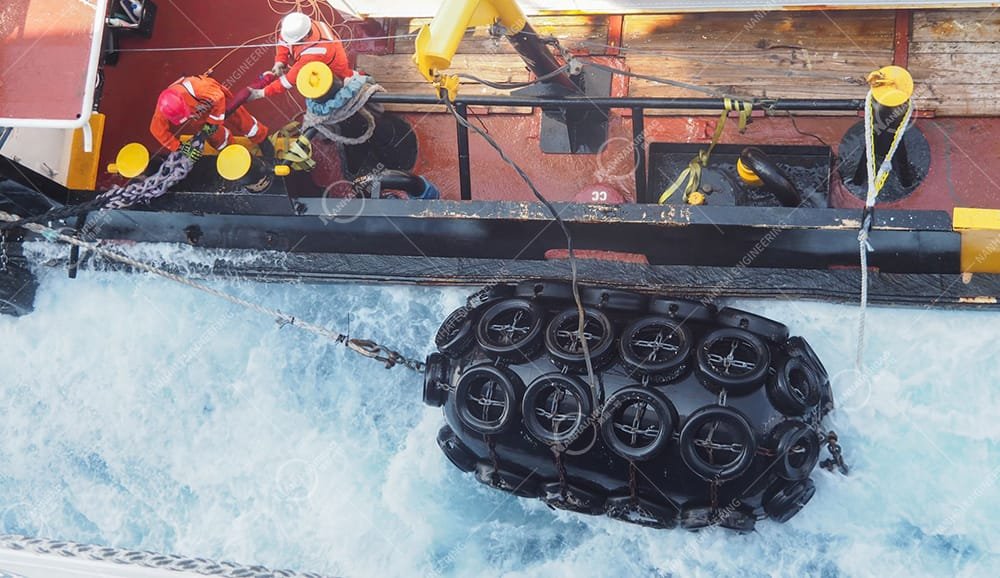
3. Why Pneumatic Fenders Became Essential for Modern Ports
The success of Yokohama fenders wasn’t just about brand reputation — it was about engineering excellence.
Here’s why pneumatic fenders quickly became the standard for global ports:
- Superior Energy Absorption
Compressed air acts as a cushion, spreading impact evenly across the fender body. This reduces stress on ship hulls and quay walls. - Low Reaction Force
Even during heavy impacts, the force transmitted to the dock remains low, protecting both the vessel and the berth. - Adaptability to Tides and Motion
Pneumatic fenders float on the water’s surface and move with the tide. This makes them ideal for ports with large tidal variations or for STS transfers. - Durable and Easy to Maintain
The outer rubber layers are reinforced with synthetic tire cord layers, making them strong and flexible. Many designs include tire-chain nets for added protection. - Flexible Installation
They can be easily relocated or used between two ships, giving port operators more flexibility in daily operations.
These features made pneumatic rubber fenders a must-have for any busy modern port.
4. Standardization: The ISO 17357 Benchmark
As the popularity of pneumatic fenders grew, the need for consistent quality became clear. In response, the International Organization for Standardization (ISO) introduced ISO 17357 – 1:2014 and ISO 17357 – 2:2014, a global standard for high-pressure floating fenders.
This standard defines everything from performance tolerances to test methods, ensuring every certified fender meets safety and durability expectations.
At NANHAI, all our pneumatic rubber fenders are manufactured in full compliance with ISO 17357-1:2014 and verified by third-party testing agencies. This ensures that our fenders deliver reliable protection, whether used for LNG terminals, oil docks, or STS operations.
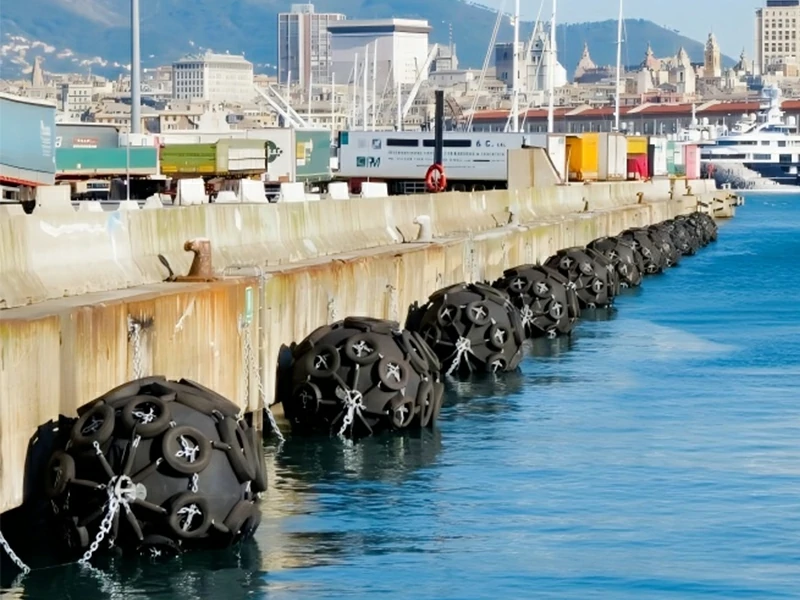
5. The Evolution: From the 1960s to the Digital Era
The original Yokohama fenders have come a long way since 1958. Over the decades, continuous improvements have made them stronger, safer, and more versatile.
- 1960s–1980s: Large-scale adoption for oil and LNG terminals. Tire-and-chain nets became standard for protection.
- 1990s–2000s: Expansion to offshore applications and STS transfers; more focus on performance consistency.
- 2010s–2020s: Global standardization (ISO 17357); improvements in rubber compounds and manufacturing techniques.
- Today: Smart monitoring systems allow operators to track pressure, wear, and service life in real-time — a new step toward digital port safety.
The core principle, however, remains unchanged: use compressed air to safely absorb marine impact energy.
6. Common Misunderstandings
Let’s clear up a few common misconceptions among port operators and designers:
- “Only Yokohama makes Yokohama fenders.”
Not exactly. Yokohama invented the design, but many companies, including NANHAI, now produce ISO-certified Yokohama-type pneumatic fenders with equal or better performance. - “Pneumatic fenders are only for oil terminals.”
They are widely used for cargo vessels, navy ships, floating docks, FPSOs, and LNG facilities. - “Air pressure fenders are fragile.”
Modern fenders are made from multi-layer reinforced rubber and can operate safely for 10–15 years with proper maintenance.
7. Why Many Ports Choose NANHAI Pneumatic Fenders
At NANHAI, we continue the spirit of the original Yokohama design — innovation, quality, and trust.
Our advantages include:
- ISO 17357-certified fenders tested for high pressure and extreme environments
- Custom engineering for any berth size or vessel class
- Third-party inspection reports (ABS, LR, BV, or DNV upon request)
- Durable materials and advanced vulcanization for long service life
- Full maintenance support, including training and spare parts supply
We believe a fender is not just a product — it’s a long-term investment in port safety and reliability.


8. How to Select the Right Pneumatic Fender
When designing or upgrading a berth, choosing the right fender is critical. Consider:
- Vessel type and size
- Berthing velocity and angle
- Tidal range and sea conditions
- Installation layout (fixed or floating)
- Required energy absorption (E/R values)
Our engineers at NANHAI can perform custom calculations based on your port’s operating data to ensure you get the ideal size and configuration for your project.
9. The Future of Pneumatic Fenders
The next generation of pneumatic fenders will combine traditional durability with smart monitoring technology. With sensors that track internal pressure, wear, and performance, port operators will gain valuable data to optimize maintenance and avoid downtime.
At NANHAI, we are already exploring this direction — making smart fenders that align with the future of digital, efficient, and sustainable port operations.
Conclusion: A Legacy of Safety and Innovation
The invention of Yokohama fenders in 1958 marked a turning point in maritime engineering. What began as a Japanese innovation has become a global safety standard.
For over six decades, pneumatic rubber fenders have protected ships and ports around the world. And as technology advances, they continue to evolve — stronger, smarter, and more reliable than ever.
At NANHAI, we are proud to build on this legacy by delivering high-quality, ISO-certified pneumatic fenders trusted by port operators worldwide.
If you’re planning a new berth, an STS facility, or a port upgrade, our team is ready to help you design a safer, more efficient fender system.
FAQ
Q1: Are Yokohama fenders and pneumatic fenders the same thing?
Almost. Yokohama fenders are the original brand of pneumatic rubber fenders. Today, many brands produce “Yokohama-type” fenders that follow the same principle.
Q2: How long can a pneumatic fender last?
Typically 10–15 years with proper care and regular pressure checks.
Q3: Can I use pneumatic fenders for STS operations?
Yes, they are perfect for STS use because they float and move with the ships.
Q4: Does NANHAI offer customized sizes?
Absolutely. We provide custom diameters, lengths, and pressure ratings to match your operational needs.