


How 52 Ship Launching Airbags Launched a 4,800HP Harbor Tug in Angola
06/09/2026How D Fenders Reduced Berth Damage at a Busy Tugboat Terminal
06/18/2026Cone Fender Solution for a Bulk Cargo Terminal in Southeast Asia
Project Overview
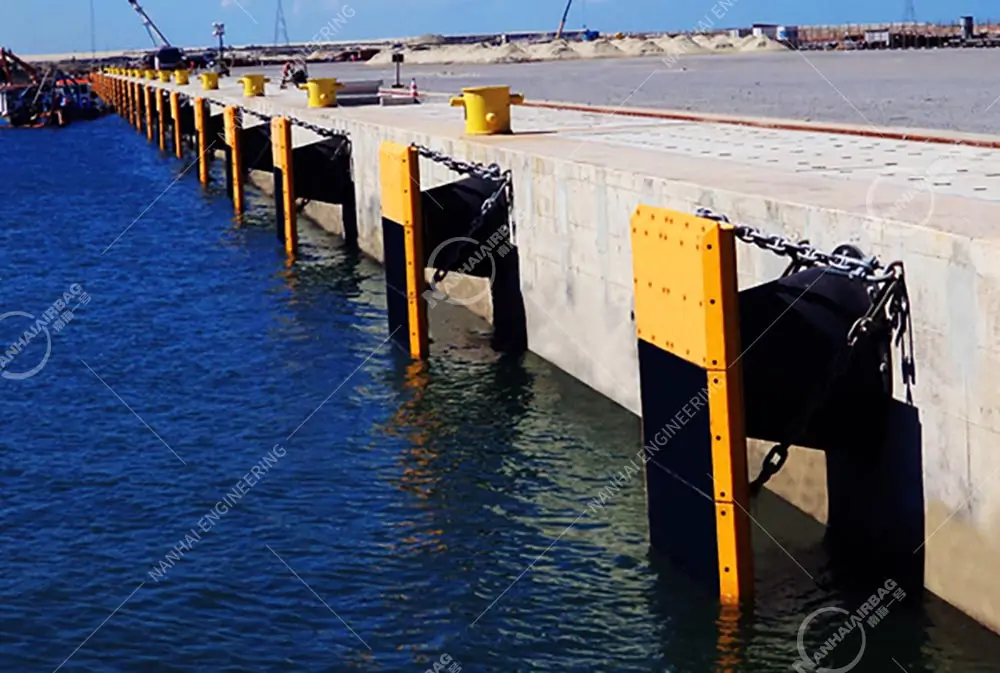
A bulk cargo terminal in Southeast Asia planned to upgrade its berth protection system during a quay expansion project. The terminal handled bulk carriers ranging from 10,000 DWT to 50,000 DWT and experienced frequent vessel berthing operations throughout the year.
The existing fender system had been in service for more than 12 years. As vessel sizes increased, the old fenders could no longer provide sufficient energy absorption. Several fenders showed visible cracks and permanent deformation, creating a higher risk of quay wall damage and increased maintenance costs.
The terminal engineering team decided to replace the aging system with high-performance cone fenders to improve berthing safety and reduce long-term maintenance requirements.
Challenges Faced by the Terminal
Before the upgrade, the terminal encountered several operational issues:
- Existing fenders had lost part of their energy absorption capability.
- Berthing impact forces increased as larger vessels visited the berth.
- Frequent maintenance interrupted normal terminal operations.
- The quay structure required better protection against repeated berthing loads.
- The terminal needed a solution capable of handling different vessel sizes.
The project owner required a fender system with high energy absorption, low reaction force, and a long service life.
Recommended Solution
After reviewing vessel data, berth dimensions, tidal conditions, and berthing energy calculations, the engineering team selected cone fenders with UHMW-PE frontal panels.
Configuration
- Fender Type: Cone Fender System
- Application: Bulk Cargo Berth
- Vessel Range: 10,000–50,000 DWT Bulk Carriers
- Front Panel: Steel panel with UHMW-PE facing pads
- Installation Location: Quay Wall Berthing Line
The cone fender design was selected because it offers higher energy absorption efficiency compared with many traditional fender designs while maintaining relatively low reaction force on the berth structure.
Installation Process
The installation was completed during a scheduled maintenance period.
The process included:
- Removal of damaged fender units.
- Inspection of quay wall anchor points.
- Installation of new cone fenders and frontal panels.
- Alignment checks and load verification.
- Final commissioning before berth reopening.
The modular design reduced installation time and minimized disruption to terminal operations.
Performance After Installation
Following commissioning, the terminal monitored berth performance for twelve months.
Results Achieved
Improved Berthing Safety
The new cone fender system provided more consistent energy absorption during vessel contact. Berthing operations became smoother, especially when larger bulk carriers arrived during tidal variations.
Reduced Structural Stress
The lower reaction force helped reduce stress transferred to the quay wall structure while maintaining excellent impact protection.
Lower Maintenance Requirements
During the first year of operation, no major maintenance work was required. Routine inspections showed no abnormal deformation or damage.
Better Protection for Visiting Vessels
The UHMW-PE panel system reduced hull contact pressure and minimized the risk of coating damage during berthing.
Project Results
After one year of operation, the terminal reported:
| Item | Before Upgrade | After Upgrade |
|---|---|---|
| Fender Damage Incidents | Several per year | None reported |
| Unplanned Maintenance | Frequent | Significantly Reduced |
| Berthing Stability | Moderate | Improved |
| Vessel Protection | Standard | Enhanced |
| Quay Wall Protection | Limited | Improved |
The project successfully increased operational reliability while helping the terminal reduce maintenance costs and improve berth safety.
Why Cone Fenders Were Chosen
Cone fenders are widely used at commercial ports, container terminals, bulk cargo terminals, and oil and gas facilities because they offer:
- High energy absorption efficiency
- Low reaction force
- Stable performance under high compression
- Long service life
- Excellent suitability for large vessel berths
For terminals planning berth upgrades or new construction projects, cone fenders remain one of the most reliable solutions for protecting both vessels and port infrastructure.
Looking for a Cone Fender Solution?
NANHAI provides custom-designed cone fender systems for ports, shipyards, container terminals, and offshore facilities worldwide. Our engineering team can assist with berthing energy calculations, fender selection, and project-specific designs.
Contact us today to discuss your berth protection requirements.