


How D Fenders Reduced Berth Damage at a Busy Tugboat Terminal
06/18/2026How Cell Fenders Reduced Berthing Damage at a Busy Bulk Cargo Terminal
07/03/2026How Foam Filled Fenders Helped a European Marina Reduce Maintenance Costs and Improve Safety
Project Overview
A marina on the northern coast of Europe had been using pneumatic fenders for several years to protect visiting yachts, workboats, and small passenger vessels. While the fenders provided good energy absorption, the marina faced two ongoing problems:
- Frequent maintenance caused by accidental punctures
- Downtime during the busy summer season
- Rising labor costs for inspection and repair
The marina management wanted a berthing solution that required less maintenance while still providing reliable protection for vessels and docks.
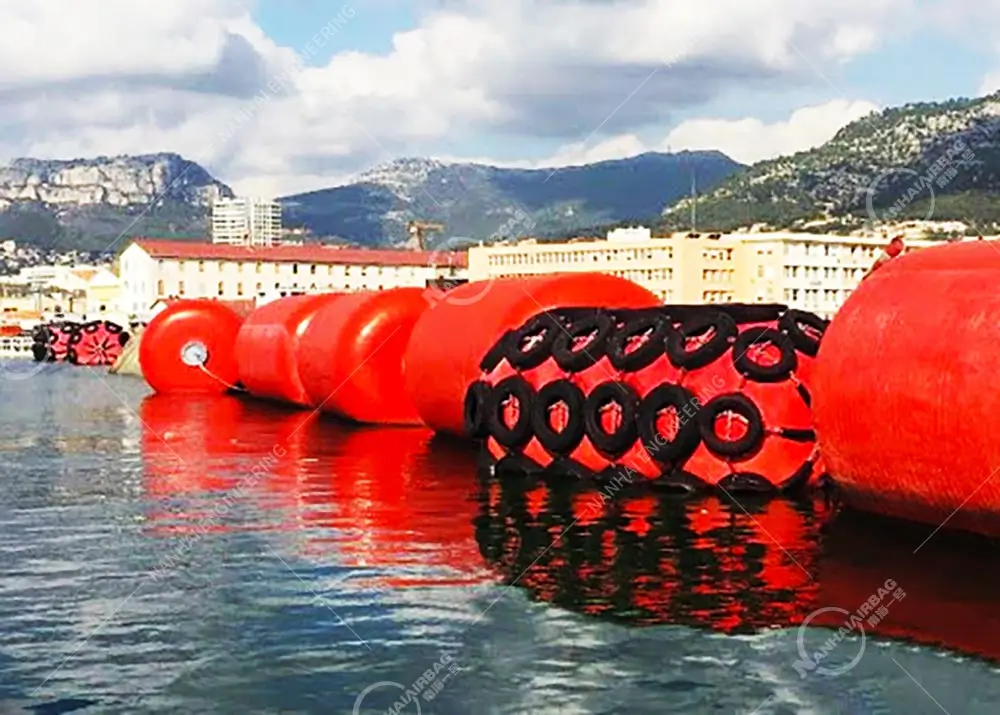
After reviewing several options, they decided to replace the existing floating fenders with foam filled fenders.
Customer Requirements
The customer listed four key requirements before selecting a new system.
- Continue protecting vessels during daily berthing operations
- Remain operational even if the outer surface was damaged
- Reduce annual maintenance work
- Withstand cold winters and strong UV exposure
Because the marina welcomes hundreds of vessels every month, reliability was more important than achieving the highest possible energy absorption.
Recommended Solution
Based on the berth layout and vessel sizes, foam filled fenders were recommended.
The selected fenders featured:
- Closed-cell EVA foam core
- Reinforced polyurethane outer skin
- Low reaction force design
- Floating construction
- UV-resistant coating
- Corrosion-resistant galvanized hardware
Unlike air-filled fenders, these fenders cannot lose internal pressure because there is no compressed air chamber.
Installation
Installation was completed during the marina’s scheduled maintenance period.
The existing mounting points were reused, reducing installation costs and minimizing disruption to normal operations.
The entire replacement project was completed within one week.
Performance After One Year
After twelve months of operation, the marina reported several measurable improvements.
Lower Maintenance Costs
Routine inspections became much simpler.
The maintenance team estimated that annual maintenance work was reduced by approximately 45% because there was no need to monitor air pressure or repair punctures.
Improved Reliability
During the first winter after installation, several service boats made repeated contact with the fenders during strong winds.
Although the outer surface showed normal wear marks, the fenders continued operating without any loss of performance.
Better Protection for Visiting Vessels
Boat owners reported smoother berthing, especially during tidal changes.
The softer reaction force helped reduce impact loads on smaller yachts while still protecting the dock structure.
Reduced Operational Downtime
Previously, damaged pneumatic fenders occasionally had to be removed for repair.
Since switching to foam filled fenders, no fenders required removal from service during the first year.
Customer Feedback
The marina’s operations manager shared the following comment after the first year:
“Our goal was not simply to buy new fenders. We wanted to reduce maintenance while keeping our berths safe. Foam filled fenders have done exactly that. They require far less attention than our previous system, and we have experienced no operational interruptions.”
Why Foam Filled Fenders Worked
Several characteristics made foam filled fenders suitable for this application.
Unsinkable Design
The closed-cell foam core continues providing buoyancy even if the outer skin is damaged.
Low Maintenance
No air pressure monitoring or reinflation is required.
Long Service Life
The polyurethane outer skin provides excellent resistance to abrasion, UV radiation, and seawater.
Consistent Energy Absorption
Unlike pneumatic fenders, performance is not affected by internal air pressure changes.
Is a Foam Filled Fender Right for Your Project?
Foam filled fenders are commonly used for:
- Commercial ports
- Marinas
- Tugboat berths
- Passenger terminals
- Offshore platforms
- Naval facilities
- Floating docks
They are especially suitable for locations where maintenance access is limited or where uninterrupted operation is important.
Conclusion
For this European marina, replacing traditional air-filled fenders with foam filled fenders resulted in lower maintenance costs, improved operational reliability, and safer berthing conditions throughout the year.
Every port has different operating conditions, but this project demonstrates why foam filled fenders are becoming an increasingly popular choice for facilities seeking long-term performance with minimal maintenance.