


What Is the Best Material for Ship Fenders?
01/06/2026How do foam-filled fenders used on Offshore Floating Docks?
01/09/2026What’s the difference between a fender and a buoy?
When navigating the world of boating, understanding the distinction between fenders and buoys is crucial. While both are floating devices, they serve different purposes and are essential for safety and vessel protection.
Why Understanding the Difference Matters
Imagine docking your boat after a day on the water, only to find unsightly scratches or damage to the hull. Or consider the confusion that arises when misidentifying a navigational buoy, leading to potential hazards. These scenarios highlight the importance of distinguishing between fenders and buoys.
What Is a Fender?
A fender is a protective cushion that hangs from the side of a boat, preventing damage when docking or when boats are moored side by side. They absorb the kinetic energy from impacts, safeguarding both the vessel and the dock.
Fenders come in various types:
- Fixed Rubber Fenders: Made of air-filled vinyl, they can be adjusted for firmness and are versatile for different docking situations.
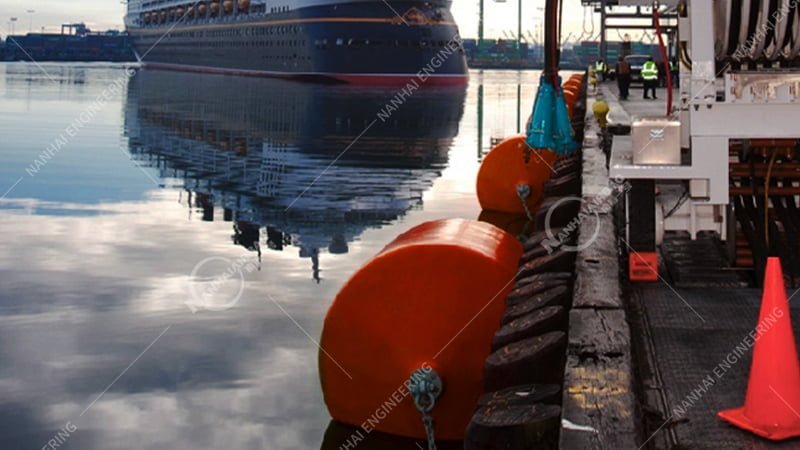
- Foam Fenders: Constructed from closed-cell foam, they are durable and less susceptible to punctures, making them ideal for long-term use.
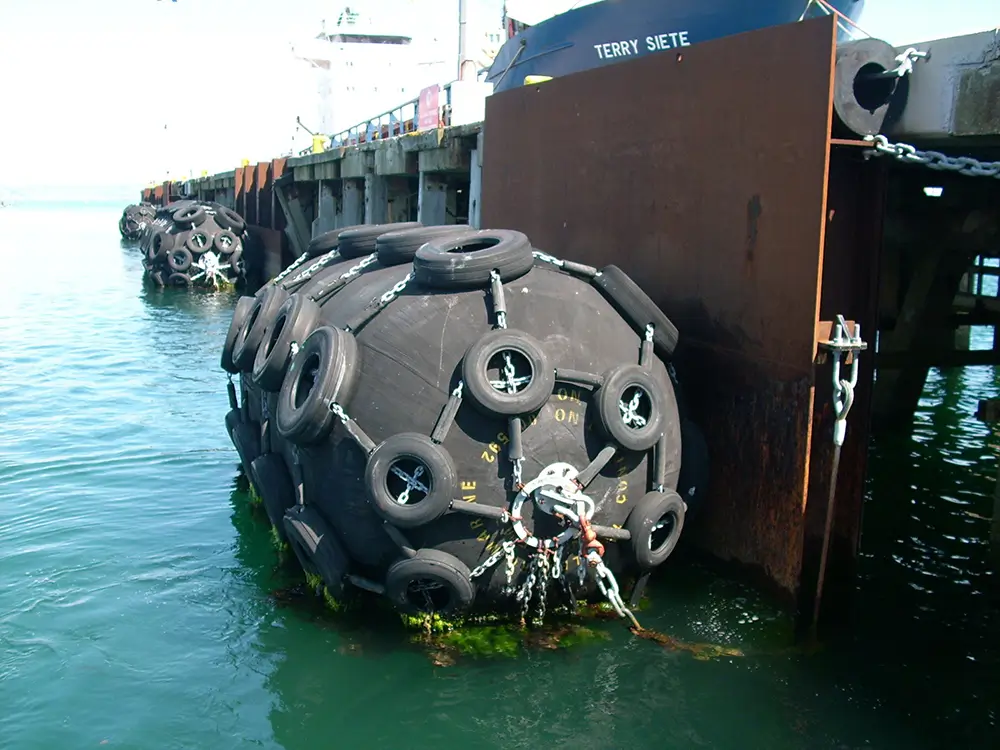
- Pneumatic Fenders: Often used for larger ships, these are air-filled and provide excellent energy absorption, suitable for ship-to-ship transfers.
The choice of fender depends on the boat’s size, weight, and docking conditions.

What Is a Buoy?
A buoy is a floating device anchored at a specific location, serving as a navigational aid or mooring point. They mark safe passages, submerged hazards, or designated mooring spots.
Common types of buoys include:
- Navigational Buoys: Indicate channels, hazards, or specific areas on the water.
- Mooring Buoys: Used to secure vessels in place without anchoring, often found in harbors or designated mooring fields.
- Special-Purpose Buoys: Mark areas like swim zones, fishing areas, or scientific research sites.
Unlike fenders, buoys are stationary and serve as markers or attachment points rather than protective devices.


Key Differences Between Fenders and Buoys
| Feature | Marine Fender | Buoy |
|---|---|---|
| Primary Function | Protects ships from impact | Serves as a navigational aid or mooring point |
| Placement | Hung from the boat’s side | Anchored in a fixed location |
| Mobility | Moves with the boat | Stationary |
| Common Shapes | Cylindrical, spherical, flat | Various shapes depending on purpose |
| Material | foam, rubber | Plastic, metal, foam |
| Usage Scenario | Docking, rafting | Navigation, mooring, marking hazards |
People Also Ask
What are marine fenders?
Marine fenders are protective devices used on boats and ships to prevent damage during docking or when vessels come into contact with each other.
How do ship fenders differ from boat fenders?
Ship fenders are typically larger and designed to absorb greater impact forces, suitable for commercial vessels, whereas boat fenders are smaller and used for recreational boats.
What are the best ship fenders?
The best ship fenders depend on the vessel’s size and docking conditions. Pneumatic and foam-filled fenders are popular choices for their durability and energy absorption capabilities.
What is a foam fender?
A foam fender is made from closed-cell foam and is used to protect boats from impact. They are durable and less prone to punctures compared to inflatable fenders.
What is a pneumatic fender?
A pneumatic fender is an air-filled fender used primarily for large ships. It provides excellent energy absorption and is ideal for ship-to-ship transfers and docking.
Understanding the distinct roles of fenders and buoys enhances safety and efficiency in boating. Proper use ensures vessel protection and navigational accuracy, making every journey on the water a smooth one.