


Cone Fender Solution for a Bulk Cargo Terminal in Southeast Asia
06/12/2026How Foam Filled Fenders Helped a European Marina Reduce Maintenance Costs and Improve Safety
06/26/2026How D Fenders Reduced Berth Damage at a Busy Tugboat Terminal
Project Background
A coastal tugboat terminal in Southeast Asia faced a recurring problem. The berth handled tugboats every day, often under challenging weather conditions. Because tugboats approached the quay wall frequently and at different angles, the existing protective system suffered heavy wear.
The port maintenance team reported three major issues:
- Frequent damage to the quay edge
- Scratches and dents on tugboat hulls
- Increasing maintenance costs every year
The terminal needed a simple and durable solution that could withstand daily contact without requiring complex maintenance.
After evaluating several options, the operator selected D fenders for the berth upgrade.
Why D Fenders Were Selected
The terminal considered several types of rubber fenders. However, D fenders offered several advantages for this application:
- Simple installation
- Strong resistance to repeated impacts
- Suitable for small and medium-sized vessels
- Cost-effective compared with larger fender systems
- Easy replacement if individual sections become damaged
Since the berth mainly served tugboats and workboats rather than large cargo vessels, D fenders provided sufficient protection without unnecessary complexity.
Installation
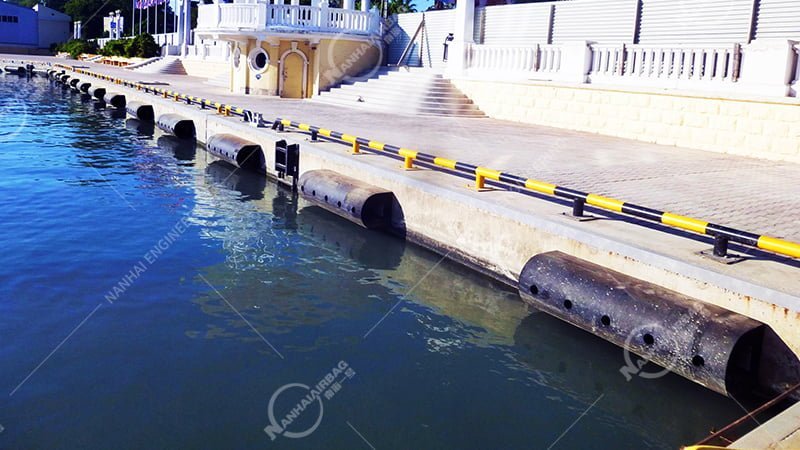
The D fenders were mounted along the berth face and at several exposed corner areas where vessel contact occurred most frequently.
The installation process was completed during a scheduled maintenance period, minimizing disruption to daily operations.
The maintenance team particularly appreciated the straightforward bolt-on design, which reduced installation time compared with some larger fender systems.
Results After One Year
After approximately twelve months of operation, the terminal reported noticeable improvements.
Reduced Berth Damage
The quay wall experienced significantly fewer impact marks and concrete repairs.
Areas that previously required regular patching remained in good condition throughout the year.
Lower Maintenance Costs
Because the D fenders absorbed most of the contact energy, maintenance crews spent less time repairing both berth structures and protective components.
The terminal estimated a clear reduction in annual maintenance work compared with previous years.
Better Vessel Protection
Tugboat operators also reported fewer hull scratches during berthing operations.
This was especially important during rough weather when vessel movement increased.
Reliable Daily Performance
Unlike more complex systems, the D fenders required only routine visual inspections.
No major maintenance work was necessary during the first year of service.
Customer Feedback
According to the terminal’s maintenance supervisor:
“We needed a practical solution rather than an expensive one. The D fenders have performed exactly as expected. They protect both the berth and the vessels while requiring very little maintenance.”
A tugboat captain operating at the terminal added:
“The berth contact feels more controlled now. We see fewer marks on the hull, especially during frequent docking operations.”
Why D Fenders Remain Popular
Although many modern ports use advanced fender systems for large ships, D fenders remain one of the most widely used solutions for:
- Tugboat terminals
- Fishing ports
- Small commercial harbors
- Marina facilities
- Workboat berths
- Utility vessel docks
Their combination of durability, simplicity, and affordability makes them a reliable choice for many everyday marine applications.
Conclusion
For ports handling small and medium-sized vessels, D fenders continue to provide an effective and economical protection solution.
In this project, the terminal achieved three important goals:
- Reduced berth damage
- Lower maintenance costs
- Improved vessel protection
The case demonstrates that selecting the right fender system is not always about choosing the largest or most advanced option. In many applications, a properly installed D fender system can deliver reliable performance for years while keeping operating costs under control.